Thursday, April 16, 2020
What's Going on Inside Morgaine's Head?
In "The Mists of Avalon," Morgaine is pretty much in love with Lancelot throughout the entire story. About halfway through the story Lancelot decides that he won't "trespass" and take her virginity and she fills with happiness for the first time since she was a child. First of all, what a life to live. Haven't been happy for the past couple YEARS?? Nice... Moving on to the actual question I'm getting at is how exactly does Morgaine go from being dizzy whenever Lancelot looks at her to "in that molten instant she actually longed for death" (Bradley, 158)? Not only does she long for death, but when walking with Lancelot and Guinivere she was also "tempted to lead them both into the impassable mire...lead them out there and lead them to drown or wander forever in the mists."(Bradley,158) That's pretty freaking dark. Now I get that apparently when Lancelot looks at Guinivere there's nothing but love in his eyes, in fact the love that he just showed Morgaine, but come on. How good is she at reading eye balls because I certainly don't see true love in anyone's eyes I look at (weird). I guess what I'm trying to ask here is just how Morgaine went from loving to Lancelot to wanting to kill both him and Guinivere. I get that they had a "deep and meaningful conversation" (they didn't), but not sure how the story ends with her leaving as a walking omen of death.

This Was Hilarious
"You...could tell us...but you won't? Were you a Don or something?"
"No, no, I've always been an Arthur." (p. 173)
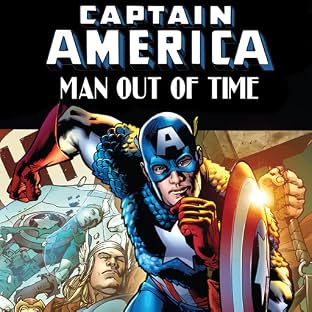
I have to be honest: Knight Life was a breath of fresh air. It was easier to read and understand. And both the situation and the writing were so awkward that it was funny. I was actually laughing out loud at certain events in the excerpt. The reason why I chose this quote is because it is an example of the strange hilarity of this book. Arthur reminds me so much of Captain America when he has to figure out how to live in 2012 while mentally he's still in the 1940s. He's a man who has come to "save the world" so to speak, but is so far removed from the current day, that he has a hard time operating in society. Arthur is the exact same way, but worse because he's coming from an age where knights were still a thing. This feeling of being out of place is reflected in the writing style. The book might not have been the best written thing, but boy was it funny to read.
Some things don't age well
 |
| Knight Life has aged about as well as these graphics from the PS2 game tie-in for the 2006 KIng Arthur movie |
Wednesday, April 15, 2020
She seems normal, so what happens?
In the Mists of Avalon Bradley wrote about Morgaine "She picked up his hand to return the gesture, and suddenly dropped it as if it had burned her; to him it was only a game, perhaps, but it could never be so to her. She turned away, hiding her burning face in the grass. Power from the earth seemed to flow up through her, filling her withe the strength of the very Goddess herself" (152).
I thought it was so interesting how Morgaine is portrayed as having human emotions like everyone else. I feel like in most stories Morgaine is described as being this all-powerful person who seems invincible. It was refreshing to see Morgaine be portrayed with more human emotions. It makes me wonder how she ends up the way she does.

I thought it was so interesting how Morgaine is portrayed as having human emotions like everyone else. I feel like in most stories Morgaine is described as being this all-powerful person who seems invincible. It was refreshing to see Morgaine be portrayed with more human emotions. It makes me wonder how she ends up the way she does.

Tuesday, April 14, 2020
In Which an Editor Complains About Bad Writing
 How come it took so long into this book for Arthur to hold a
press conference? As a writer and editor reading this, there has got to be a lot of
fluff that could be cut from the beginning of the book if we’re on page
170-something and the main storyline of Arthur running for mayor is just now
starting. There are inconsistencies in verb tense and POV and I can’t stand
reading this because it’s just plain bad writing. Yes, this entire post
is just going to be complaining about the writing because it’s that bad.
How come it took so long into this book for Arthur to hold a
press conference? As a writer and editor reading this, there has got to be a lot of
fluff that could be cut from the beginning of the book if we’re on page
170-something and the main storyline of Arthur running for mayor is just now
starting. There are inconsistencies in verb tense and POV and I can’t stand
reading this because it’s just plain bad writing. Yes, this entire post
is just going to be complaining about the writing because it’s that bad.First of all, adverbs ad nauseam. Dialogue is broken up in odd places. During the press conference, all the interruptions to dialogue to allow the reporters to laugh in response… nothing was funny. The Monty Python joke was not explained well and ill-timed for the situation. Cheese balls? (p 169-70) Really? On page 188, Gwen “cuts in” when she’s not interrupting anyone and then gets a “trailing off” ellipsis when it should be a dash because she’s interrupted by Arthur’s next line. These are just a few examples of the things that irritated me. Also, who’s POV are we supposed to be in? Seems like it’s supposed to be a limited omniscient narrator, but it’s inconsistent and the POV switches mid-scene sometimes. And where was the proofreader for this book? Must’ve been his or her day off.
Merlin is a jerk and Arthur’s personality is inconsistent. I
don’t fully understand Gwen’s character from this excerpt, but it seems like everyone steps over her when I feel like she’s just trying to do her job. What is this
book? Because I don’t like it.
Sunday, April 12, 2020
Confusion With The Sword
So I am going am address the confusion with the whole situation with Sir Bedivere and the sword. Now the knights and knights Arthur caught themselves in an absolute predicament with Arthur being wounded and everyone else submitting, but himself. Even after Arthur question his actions of disobedience and such it still leaves a question unanswered. Now I have read some comments about this and they all seem to make sense and the one that stick out the most is the representation on the sword. It is a one of a kind, powerful, well known weapon that is used and when someone who is not used to that is able to wield that. You have to think whaat kind of confidence or power this might have given him. I think one of the reasons he didn't throw it down is because of how he felt. Sir Bedivere probably thought for that time he was invincible and able to take anything and anyone on that challenged him while in posession of Excalibur. I relate this to how I would kinda feel if I had the opportunity to hold a real lightsaber. I don't know if I would ever let it go or what I would do with it.
reason the the madness
"Were it well to obey then, if a king demand
An act unprofitable, against himself?
The King is sick, and knows not what he does."
An act unprofitable, against himself?
The King is sick, and knows not what he does."
This is from the scene where Sir Bedivere was given the order by Arthur to throw the sword, this quote is showing why he wasn't throwing the sword, he realizes Arthur is not thinking straight and believes not throwing it would be best.
Subscribe to:
Posts (Atom)